This guide covers the ways to find out what is being built at an address in Seattle. Every record involved is public, and each lookup works from either a street address or a permit record number.
Start with the sign if the site has one, because the sign shows a number. Then take that number, or just the street address, into the city's records.
The sign posted on the site
The city has to tell neighbors about most land use applications before it decides them. The Seattle Department of Construction and Inspections, known as SDCI, describes the notice this way. "Based on the application type, we post the public notice in SDCI's Land Use Information Bulletin, mail it to property owners, and post it at the site." The rules behind that are in the Land Use Code at SMC 23.76.012.
The sign comes in two sizes. Smaller applications get a modest land use sign at each street frontage of the site. Projects that go through environmental review or design review get a large sign, placed so it can be read from the street or the sidewalk, and it stays up until the city has finished acting on the application.
The most useful thing on the sign is the record number. Seattle record numbers end in a letter code that tells you what kind of application it is. A number ending in LU is a land use application, which is the zoning side of a project, covering questions like height, use, and how many units go on the lot. A number ending in CN is a construction permit, which is the approval to build. One address often has several numbers running at the same time for demolition, shoring, the building itself, and the mechanical work.
Write the number down along with the description of the work. If the notice lists a comment deadline, note that too. SDCI publishes the comment period both in its bulletin and on the notice posted at the project site.
Look the address up in the city's records
Four city tools cover a single address. They overlap, so pick by what you want to see.
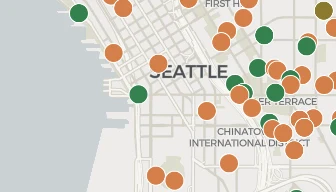
Shaping Seattle shows permit activity on a map. Shaping Seattle, Property and Building Activity lets you enter an address or a project number, or browse the map, and SDCI describes it as the place to find active construction and land use permits along with projects that require design review approval. Clicking a site shows the project description, the permit stage, and links to documents.
The Seattle Services Portal contains the complete file for each permit. Open the portal, click Search All Records, and enter an address or a record number. It covers permit activity from 2005 to the present, with the applicant, the project description, the current status, and the filed documents.
The permit and site history tool searches by address and returns a site's permit history. Enter an address here and you get the site's zoning, a link to King County Assessor data, and results you can filter by date, record type, and keyword.
The records library covers older documents. The permit and property records library has scanned land use plans from roughly 2007 forward, permits and inspections from roughly 2005 forward, and microfilm records going back further. Use it when you want to know what stood on the lot decades ago.
The bulletin and the comment period
Public notices for land use decisions all appear in one running list. The Land Use Information Bulletin is where those notices are published, which makes it a good place to check for a whole neighborhood rather than one address.
The standard comment period is 14 days. It can be extended by another 14 days if someone asks in writing before the first period ends. Shoreline projects get 30 days and cannot be extended. Early Design Guidance and Streamlined Design Review get 14 days and cannot be extended either. Comments go in through the city's public comment form. Comments become part of the project record, and a master use permit decision can be appealed once it is issued.