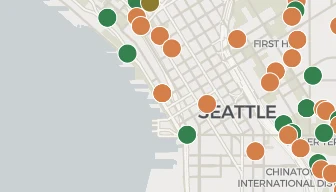
If you have looked at new apartment buildings in Seattle, you have probably seen a listing marked MFTE. The rent is lower than the other units in the same building and there is an income limit attached to it. MFTE stands for Multifamily Tax Exemption. The owner of the building gets a break on property taxes, and in exchange the owner sets aside some of the apartments at restricted rents for renters whose household income falls under a limit.
State law and city code set the terms on both sides. The details matter if you are trying to find one of the units.
What the program is
The Seattle Office of Housing runs the program. The office describes it plainly. "The Multifamily Property Tax Exemption (MFTE) Program offers a property tax exemption on new multifamily buildings. In return, developers must set aside a certain number of rent-restricted apartments for income-eligible households."
The program rests on state law at RCW 84.14, which covers new and rehabilitated multiple unit dwellings in urban centers, and on city code at SMC 5.73. The current version of the Seattle program is called Program 7, adopted by Ordinance 127316. Plenty of older buildings still operate under earlier versions, which matters when you are looking at one specific building.
Seattle has been running some form of the program since 1998. The Office of Housing reported in 2024 that the program had produced more than 7,000 income and rent restricted apartments over its life. A developer who wants the exemption has to apply at least 180 days before the project is finished.
What the owner gets
The exemption is narrower than it sounds. Under state law it applies to the value of the new housing construction, conversion, and rehabilitation improvements. It does not cover the land or improvements that are not housing, so the owner keeps paying full property tax on the land and on commercial space such as ground floor retail. What comes off the tax bill is the value of the residential building itself.
The length of the exemption depends on whether the owner takes on the affordable housing commitment. Without one, state law provides eight successive years starting January 1 of the year after the exemption certificate is issued. With a commitment to rent or sell at least 20 percent of the units as affordable housing, the term runs 12 successive years. Seattle's program is built around the 12 year version.
State law also allows an extension. A project within 18 months of expiration can have its exemption extended for another 12 years, subject to city approval, if the owner meets the local requirements in place at the time and again commits at least 20 percent of the units as affordable housing for low income households.
What renters get
Under the current versions of the program, 20 percent or 25 percent of the apartments in the building have rent and utilities limited for income qualified renters. The share depends on which version of the program the building entered, and earlier versions used different shares, so the number for a specific building comes from the agreement recorded on that property. The Office of Housing says Program 7 incentivizes more family sized units by increasing the share of total units that must have two or more bedrooms to meet the 20 percent unit set aside.
The limits work as percentages of area median income. The Office of Housing publishes income and rent limits, and the percentage that applies to a given unit comes from the regulatory agreement recorded on that property's title. Income limits vary by household size, and rent limits vary by the characteristics of the unit, meaning the type, the number of bedrooms, or the net area. The published figures are updated on an annual cycle, so always read the current limits rather than a number you saw in an old listing.
Property managers carry the obligations on the building's side. They have to provide the correct type and number of affordable units, set rents at or below the published caps, and approve only eligible households.
How long the restriction lasts
The exemption runs with the building rather than with the household living in the unit. The rent restriction on a unit is tied to the property's term, counted from the year after the certificate is issued. If you move into a restricted unit partway through, the restriction still ends when that term ends, unless the city approves an extension. A leasing office can tell you which program the building is in and when its exemption started.